Foreign Policy · 21 Sep 2026
Hand back the Falklands, the Chagos Islands and Gibraltar
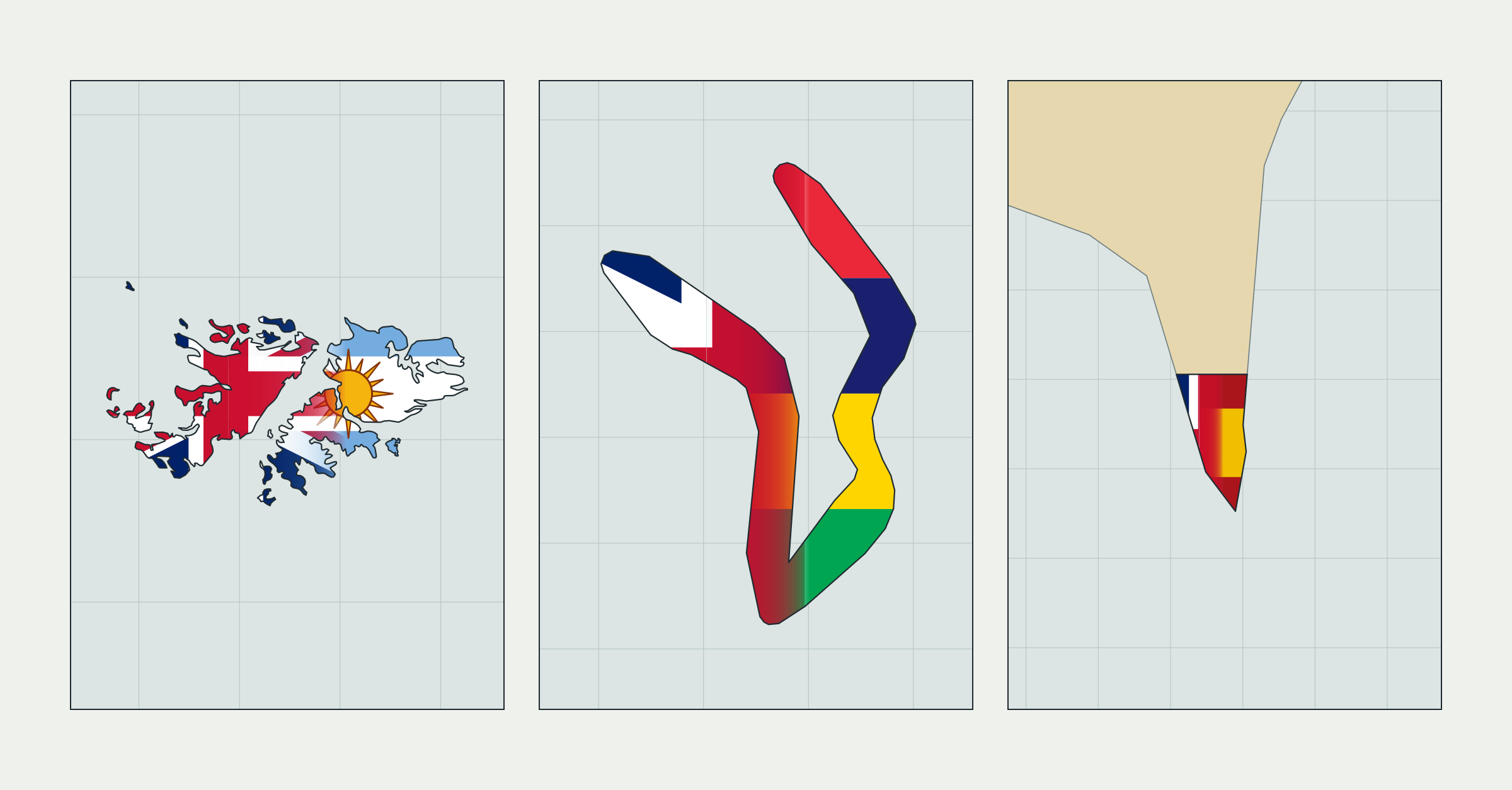
Hand back the Falklands, the Chagos Islands and Gibraltar.
And the rest of the Overseas Territories, but learn the lessons of Hong Kong.
My Union of the Isles argument rests on one idea: what is physically together belongs together. And its converse: what isn't together doesn't belong together.
17 in total. Bermuda, the Caymans, the Turks and Caicos, the BVI, Anguilla, Montserrat, St Helena, Ascension, Tristan da Cunha, South Georgia, the British Antarctic Territory, Pitcairn, the Cyprus base areas, and the three Crown Dependencies. The lot.
In New York this week Andy Burnham told Trump we would defend the Falkland Islanders' right "to self-determination and to remain British". The Falklands voted 1,513 to 3. Gibraltar 17,900 to 187. I understand why a Prime Minister says it. It's the easy, populist answer, not the right one. Self-determination isn't the core principle.
We hold the South Atlantic because in 1982 we could, with American help. Neither lasts. Argentina is reviving its Malvinas rhetoric. Asked if the US would defend the Falklands, Trump said it's "a long way away".
So the choice isn't keep or hand over. It's hand over on terms we write while we still hold the pen and the power, or lose it later on terms someone else writes. That was Britain in 1979 over Hong Kong. We spent 13 years pretending otherwise.
We gave 3.25m Hong Kongers a passport with no right to live here. It took until 2021 to fix. Do the opposite, and do it first: unconditional right of abode for every British citizen in every territory, for life, transmissible, legislated before a single negotiation opens. Nobody is disposed of if everybody has somewhere to go.
Make the guarantees enforceable. The Joint Declaration had no arbitration clause, no court, no penalty. Beijing read it correctly, as a letter of intent.
Never hand over the power to interpret the agreement. Article 158 of the Basic Law did more damage than any tank.
Keep the military bases, and keep them free. 199-year leases at £zero rent. Compare Chagos: £101m a year for 99 years to rent a base we already own. This week Trump called it "a terrible deal" and said the PM would look at it. Burnham nodded. Streeting confirmed the review the next day.
Then look at Greenland, signed 22 September 2026: permanent access, basing and overflight, room to expand, no bases for non-NATO powers. That is what strength buys. Put those terms in our leases.
Give it 30 to 50 years. Long enough to get used to the idea and act.
The numbers are small. 0.5m people across all 17. Sheffield. Most can already come and haven't. When we opened the door to 2.9m Hong Kongers, 172,000 came. This is not an immigration event.
We will do this eventually. Every empire does. The only question is whether we set the terms, or wait until someone sets them for us.
Do it. But do it right.
𝚃𝚑𝚎 𝙾𝚗𝚎 𝙼𝚊𝚗 𝚃𝚑𝚒𝚗𝚔 𝚃𝚊𝚗𝚔
This is an abridged form. The full article can be found at https://joelhagan.com/post/cc312b92-0a33-46a7-80e4-6a58e7208158
Version 2: Website
Final version. Roughly 2,200 words.
Hand back the Falklands, the Chagos Islands and Gibraltar
And the rest, but learn the lessons of Hong Kong
The Union of the Isles argument rests on a single idea: what is physically together belongs together, and borders drawn across continuous ground are artefacts of somebody's war rather than facts about the world.
And the corollary to that is: what isn't physically together doesn't belong together. So we need to apply the principle to all overseas territories.
There are 17 territories in total: 14 Overseas Territories and 3 Crown Dependencies.
• The Caribbean and North Atlantic: Anguilla, Bermuda, the British Virgin Islands, the Cayman Islands, Montserrat, and the Turks and Caicos Islands
• The South Atlantic and Antarctic: the Falkland Islands, South Georgia and the South Sandwich Islands, Saint Helena, Ascension and Tristan da Cunha, and the British Antarctic Territory
• The Mediterranean and Europe: Gibraltar, and Akrotiri and Dhekelia, the Sovereign Base Areas in Cyprus
• The Indian and Pacific Oceans: the British Indian Ocean Territory, better known as the Chagos Islands, and the Pitcairn Islands
• The Crown Dependencies: Jersey, Guernsey and the Isle of Man
The Crown Dependencies are a special case. They were never colonies, they already govern themselves, and they are no more physically joined to France than to England. So for them the answer is not transfer. Since geographic proximity is the principle, the first offer should be to join the Union of the Isles outright, which is where they most naturally belong. If they decline, the answer is formalisation: a written treaty of free association with the UK, or full independence, at their choice.
Self-determination doesn't swing it
A principle you apply only where it is comfortable is not a principle. It is a preference with a costume on.
Self-determination has been given primacy, and it is still the official British position. Meeting Donald Trump in New York this week, on the sidelines of the annual gathering of world leaders at the United Nations, Andy Burnham told him that Britain would stand firm against any threats and would defend the right of the Falkland Islanders "to self-determination and to remain British".
I understand why a Prime Minister says it. But it is essentially an easy, people-pleasing and populist position rather than the right and best answer arrived at by the application of the correct principle.
Falkland Islanders voted 1,513 to 3 in 2013 to remain a British Overseas Territory, on a 92 per cent turnout. Gibraltar voted 17,900 to 187 against even shared sovereignty in 2002, having voted 12,138 to 44 against Spanish sovereignty in 1967.
Those are not ambiguous numbers, but they don't settle the question.
Here's why. A referendum is a statement about what people want. It is not a statement about what can be held. We have the South Atlantic because in 1982 we could take it back, and because for 44 years American support has kept the question theoretical rather than practical.
Neither condition is permanent. Argentina has never dropped the claim, recently reviving its rhetoric that the Malvinas are a part of Argentina. This month its president, Javier Milei, said Washington was "assessing their historical position" on the islands. And Trump has been equivocal, a change from long-standing US backing for Britain. Asked whether he would come to our aid, he said we took the islands back strongly in 1982 "but it's a long way away", before lashing out about the UK's failure to support his war with Iran: "Don't forget, you get a big percentage of your oil from the Strait of Hormuz, and you weren't there to help me." As ever, his position, and therefore the US's, isn't clear. But the US certainly couldn't be relied on for support at the moment.
So the real choice is not between keeping and handing over. It is between handing over on terms we write while we still hold the pen, and losing the argument later on terms somebody else writes.
That was precisely Britain's position over Hong Kong in 1979. Governor MacLehose went to Beijing to solve a problem about mortgage terms on New Territories leases and came back having been told that China would recover Hong Kong. Everything after that was about terms. We spent 13 years behaving as though it was about sovereignty.
Lessons from Hong Kong
I wrote a long research paper on the handover of Hong Kong before writing this, because the lessons are more specific than the general gloom suggests. Four of them matter here.
Settle nationality first, unconditionally, before anything else. The British Nationality Act 1981 reclassified 3.25 million Hong Kong British subjects into a category with no right to live in Britain. After Tiananmen we offered full citizenship to 50,000 heads of household, selected on a points system weighted for occupation and education. Fifty thousand out of 3.25 million, chosen by points. It is difficult to read that as anything other than a statement about who we considered worth having, and a token gesture at best.
It took until 2021 to correct, by which time the guarantees had already failed.
So do the opposite and do it first. Unconditional right of abode for every British citizen in every territory, for life, transmissible to the next generation, legislated before a single negotiation opens and regardless of how anybody votes afterwards. Nobody is being disposed of if everybody already has somewhere to go. This is the one thing in the entire proposal that is wholly within our own gift and cannot be vetoed by anyone.
Make the guarantees enforceable, or admit that they are not. The Sino-British Joint Declaration is a treaty registered with the United Nations. It contains no arbitration clause, no submission to any court, no third-party monitor and no penalty for breach. The Joint Liaison Group was consultative and dissolved by design in 2000.
Beijing read that document correctly. We told Hong Kongers for 36 years that their rights were legally guaranteed, while knowing there was no remedy. That is the part I find hardest to forgive, and it was free to avoid: we could simply have said, in 1984, that these undertakings rest on Chinese good faith and nothing else.
Never concede the power to interpret the agreement. Article 158 of the Basic Law gives the final word on what the Basic Law means to the Standing Committee of the National People's Congress. Almost every subsequent erosion ran through mechanisms the Basic Law itself provided. Beijing rarely needed to breach the text. It mostly needed only to read it.
Whoever interprets an agreement eventually decides what it is.
Build the institutions decades early, not in the last five years. Britain governed Hong Kong for 155 years without meaningful elections and then attempted democratisation in the final decade. Chris Patten's 1992 reforms were right in principle and arrived at the exact moment we had least leverage. Beijing cancelled the through train, and the legislature elected in 1995 was replaced after 21 months by one appointed by a Beijing-selected committee.
Institutions that have existed for 40 years are part of the status quo an agreement preserves. Institutions created in year 92 of 99 look like sabotage, and get treated as such.
Keep the military bases, at £0 cost to the UK
Military presence benefits the host as well as the UK in terms of security, although it might also be said in some cases to raise the risk. RAF Akrotiri, in the British Sovereign Base Areas in Cyprus, was hit by an Iranian-made drone overnight on 1 to 2 March 2026.
Akrotiri is a live operational base. Gibraltar has a military base. Ascension is a mid-Atlantic air bridge. Diego Garcia commands the Indian Ocean. Mount Pleasant, the airbase on East Falkland, is why the Falklands are defensible at all. These have strategic value.
But sovereignty over the surrounding territory is a twentieth century way of securing a runway, and it is no longer necessary. The Chagos treaty signed in May 2025 shows how the mechanism works: sovereignty transfers to Mauritius, Diego Garcia is leased back for 99 years with an optional 40, and operational control is unaffected.
However, the Government agreed to pay an average £101 million a year, roughly £3.4 billion over the term, to lease a base we already owned, after an adverse International Court of Justice opinion had destroyed our negotiating position. The implementing Bill has been stalled since January 2026, and the deal has been on hold since the spring in the face of White House opposition.
This week the deal took another probably fatal blow. In that same conversation on 22 September 2026, sitting beside the Prime Minister, Trump said he did not support the deal and called it "a terrible deal". He dismissed Mauritius's claim, saying somebody had turned up with ownership after decades and centuries. He called Diego Garcia strategically very important, and noted the long-range bomber flights it launched against Iran. Then he said he thought the Prime Minister would be looking at it. Andy Burnham nodded and said yes. A review was confirmed by the Defence Secretary Wes Streeting the next day.
That is the position we have negotiated ourselves into. We agreed to give away sovereignty and to pay to rent back our own base, and the arrangement now depends on the goodwill of an American president who thinks it is ridiculous, and on a British Prime Minister who appears to agree with him. It is worth remembering that Britain also refused the Americans the use of Diego Garcia for the opening strikes on Iran in February 2026. That is the context for the Hormuz remark above.
We need to act from strength, and then the terms are different. Every transfer in this programme should be conditional on a 199-year lease at zero cost, with the receiving state accepting the existing British military presence, and potentially its expansion. Not a rental agreement. A condition precedent. If they will not accept it, there is no transfer and we have lost nothing.
199 years rather than 99 for a straightforward reason: a 99-year lease is a countdown, and everybody starts pricing the expiry from about year 60. We know this because we watched it happen.
We should learn and incorporate from elsewhere. The agreement between the United States, Denmark and Greenland, signed in New York on 22 September 2026, amends and supplements the 1951 defence agreement. As described, it guarantees permanent access, basing and overflight rights, the ability to expand the American military footprint, a bar on bases for non-NATO powers, and stronger NATO engagement in the Arctic.
We should incorporate these terms in our own lease agreements.
Whether Denmark should keep Greenland at all is a separate debate. My principle says not.
Give it time, and take our time
30 to 50 years. Not a parliament, not a decade.
The point of the length is not caution for its own sake. It is that a person who is 35 when their territory's process opens should be in their sixties when it concludes. Long enough to get used to an idea, be reconciled with it, and act on it: sell a house, move a business, retrain, raise a child through school, or decide they would rather live in Wiltshire. Long enough that nobody is being moved against the clock.
Stagger it, too. The uninhabited claims first, where there is no human cost and the machinery can be proved: the British Antarctic Territory, which is already frozen under the Antarctic Treaty and overlaps Argentine and Chilean claims, and South Georgia. Then the cases where our holding is itself the wrong, which means the Cyprus Sovereign Base Areas, 254 square kilometres of Cyprus containing around 18,000 people, most of them Cypriot civilians who have never been asked and have no vote in the country that governs them. Then, only when each previous stage has demonstrably worked, the rest, incorporating any new lessons along the way.
And make it self-terminating. If a stage goes badly, the next one does not open. A 50-year programme that cannot be abandoned is how governments end up doing things nobody wants.
On immigration, which may be worrying some
I started out worried about this myself, in terms of acceptability, notwithstanding the principle that must be applied. Given the housing crisis, tight Government finances and the general antipathy towards immigrants, would this founder as an idea? I did the numbers and they changed my mind.
All 17 territories together hold only half a million people. That is Sheffield. It is the absolute ceiling, assuming every single person comes to the UK, which will not happen.
The British Overseas Territories Act 2002 granted full British citizenship, with right of abode, to British Overseas Territories citizens. That right has existed for 24 years and has been largely unused, although most have no pressing reason to use it. Note that those connected only with the Sovereign Base Areas in Cyprus were left out of the Act altogether.
We have a recent comparator where there was a burning platform. When the National Security Law was imposed on Hong Kong, we opened a route to around 2.9 million people who were watching their freedoms disappear in real time. About 172,000 came, which is under 6 per cent, and total applications have fallen short of the government's lowest forecast. That was a population with every reason to run.
These populations would be leaving nothing. Apply the same take-up rate and the programme produces a few thousand people across several decades, arriving in the low hundreds a year. That is a rounding error in the migration statistics.
Conclusion
We need to stop treating these 17 territories as a permanent feature of our world and start treating them as a position to be resolved on our own terms, while we still have terms to offer and the strongest possible negotiating position.
Legislate the citizenship guarantee first and unconditionally. Build a statutory cross-party commission that can survive eight general elections. Renounce the uninhabited claims. Open negotiations where our holding is indefensible, beginning with Cyprus. Condition every transfer on a 199-year rent-free lease of anything strategically useful.
Take 30 to 50 years for the transfer. Stop at any point where it is going badly.
We will be forced to do all of this eventually, when our negotiating position is considerably weaker. It is a matter of time. It is the experience of every empire, and none of them has ever chosen the timing well. The only real question is whether we take control of the timing and the terms, or wait until somebody sets them for us.
Do it. But do it right.
Comments (0)
Loading comments…