Where the parties stand now
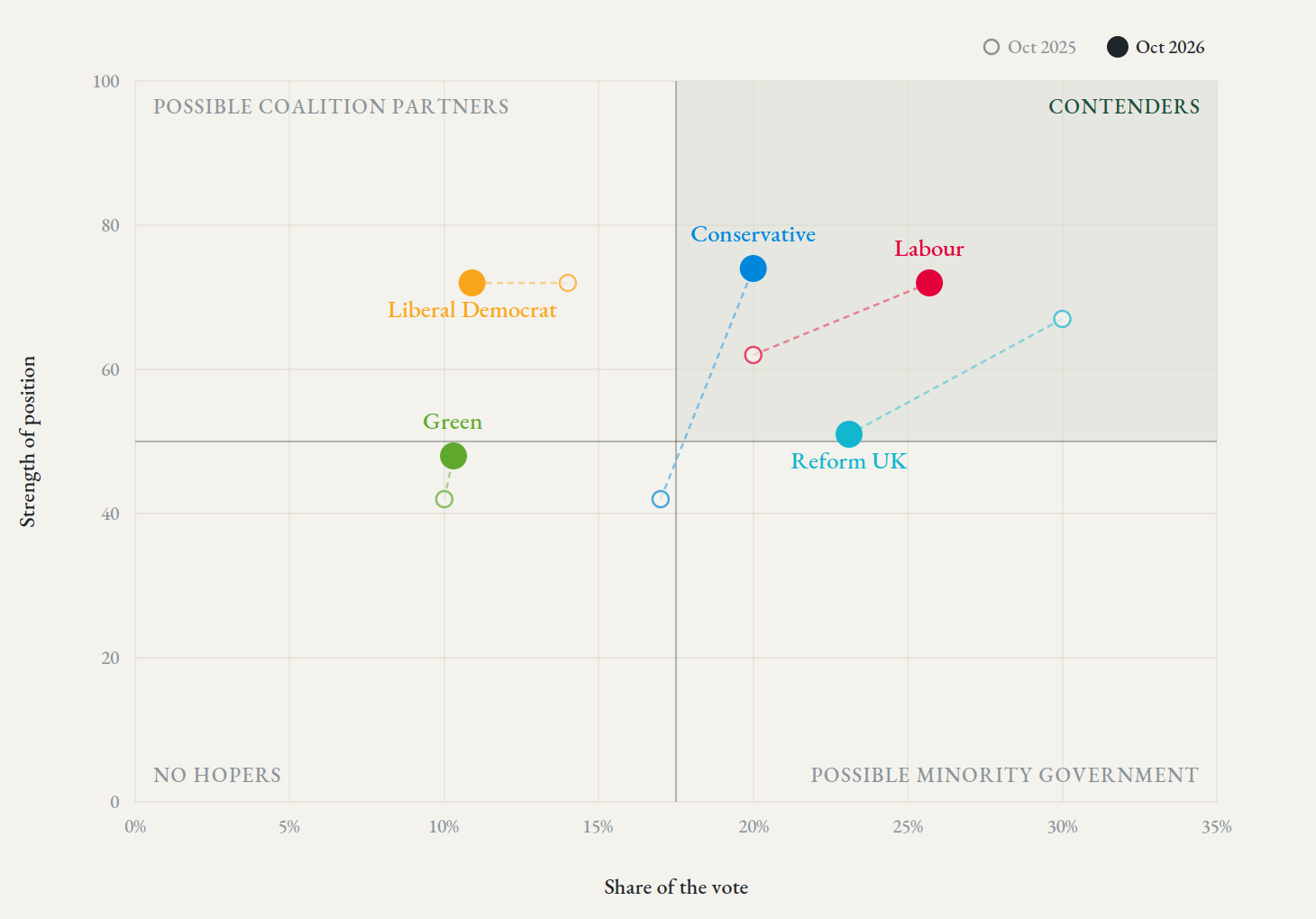
After the Conference season, Labour is a stronger contender. The Tories have made themselves a contender. Reform are dropping out of contention. The Lib Dems are also-rans. The Greens are no-hopers.
It’s a big change on a year ago.
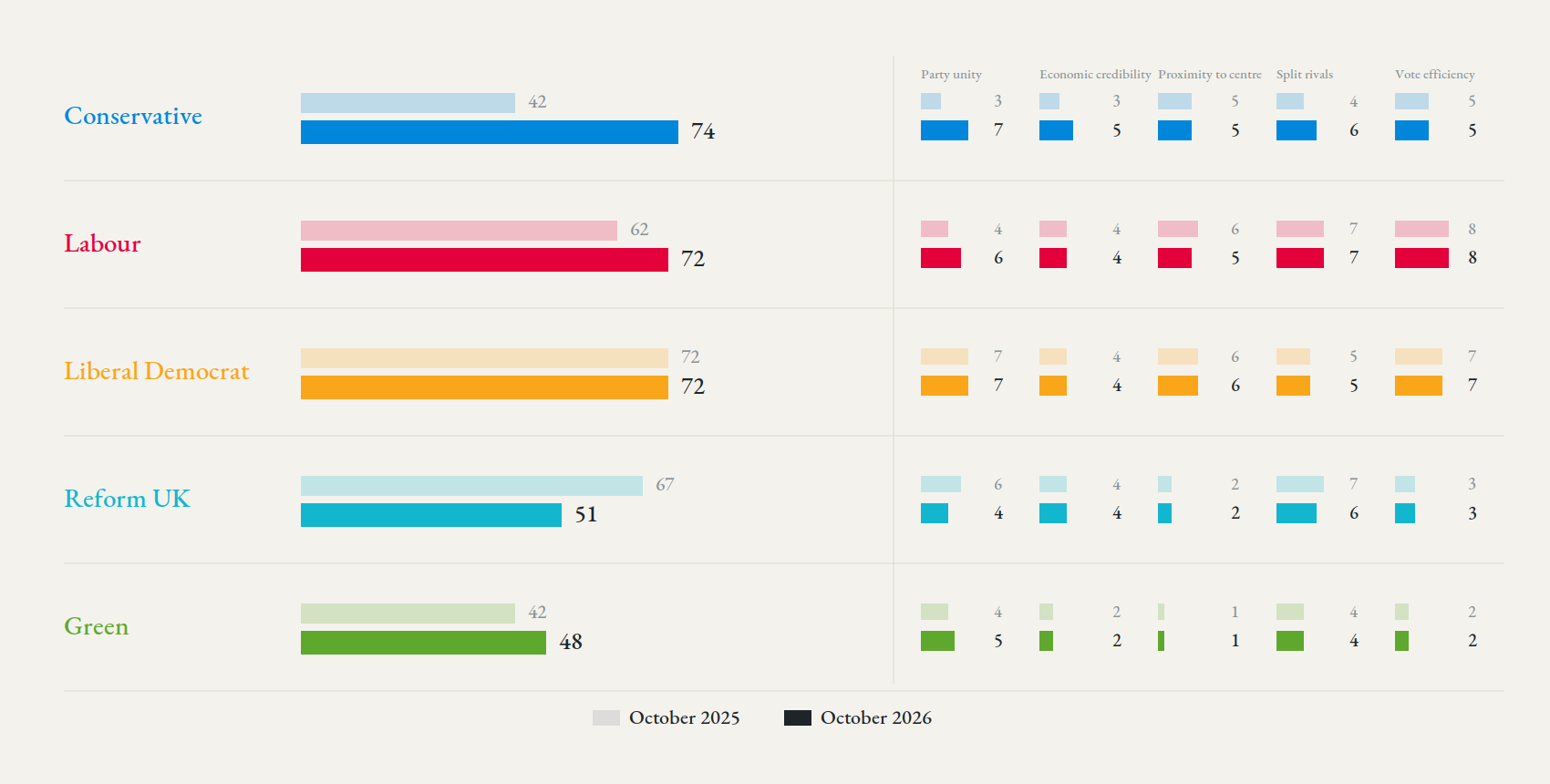
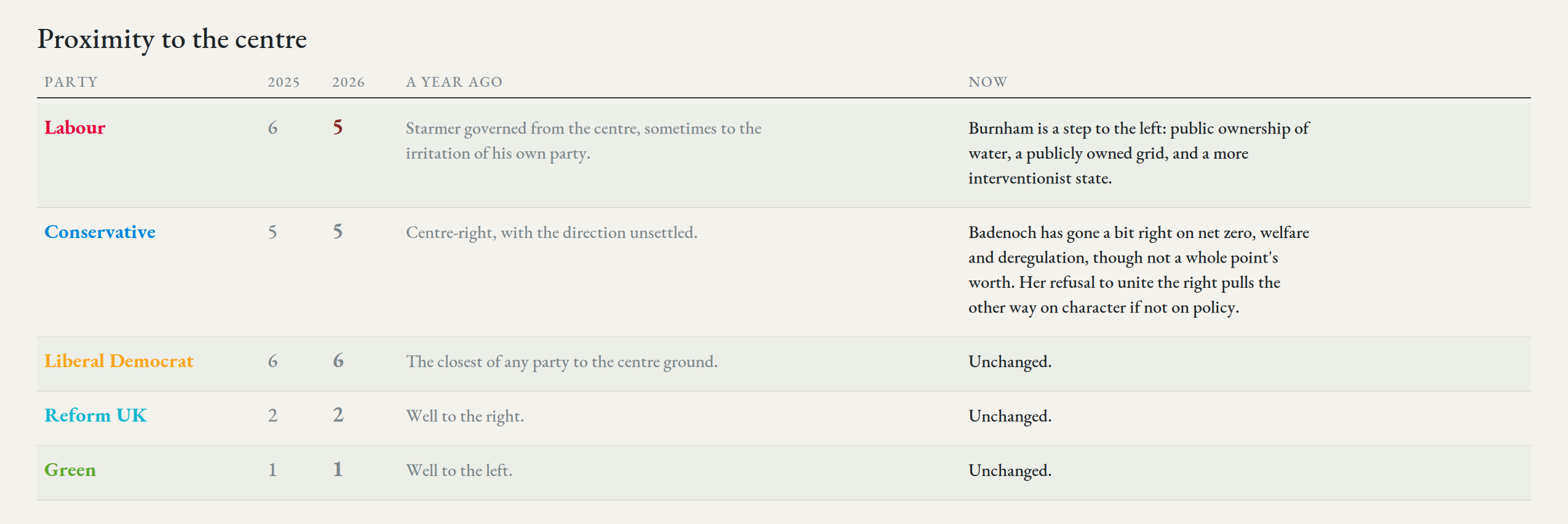
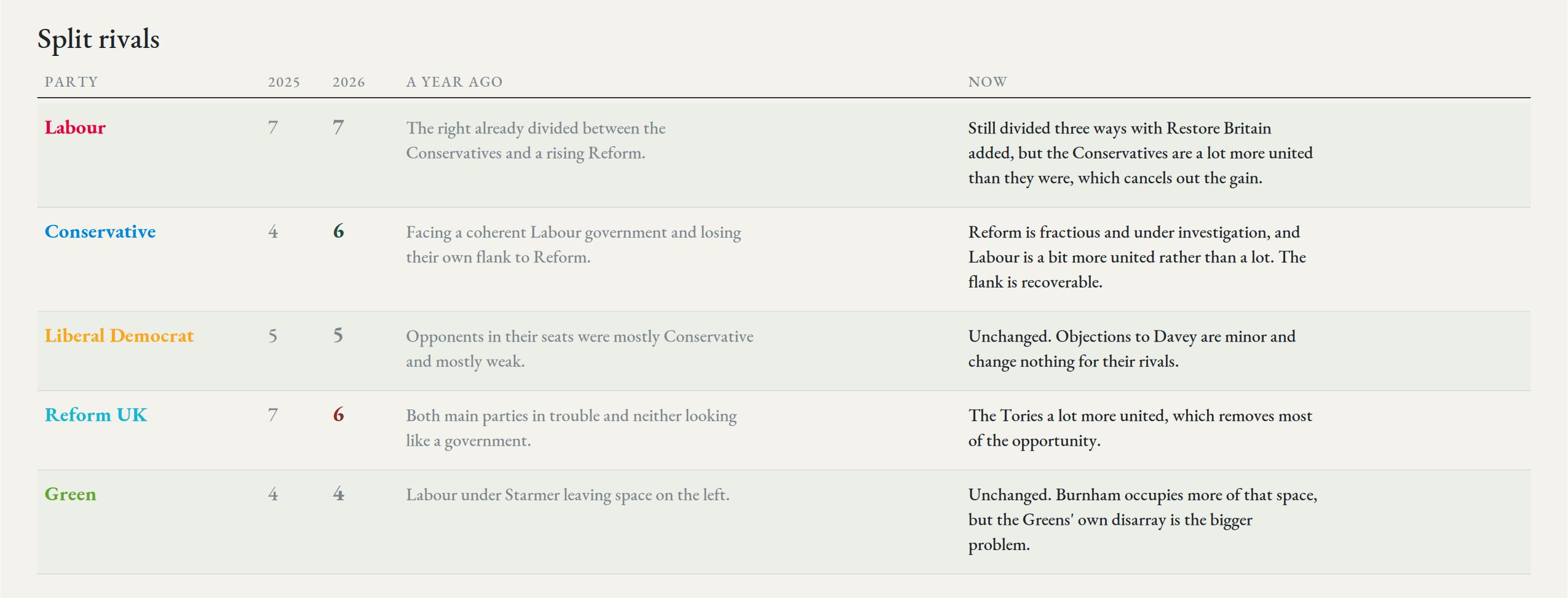
This is the scoring on the election winning criteria that I defined in my previous Take https://joelhagan.com/post/c2db5437-c2af-40e1-8e25-99cbacaef23b which underpin the chart. Weighting is applied depending on the contribution that each criterion makes to winning, according to my analysis.
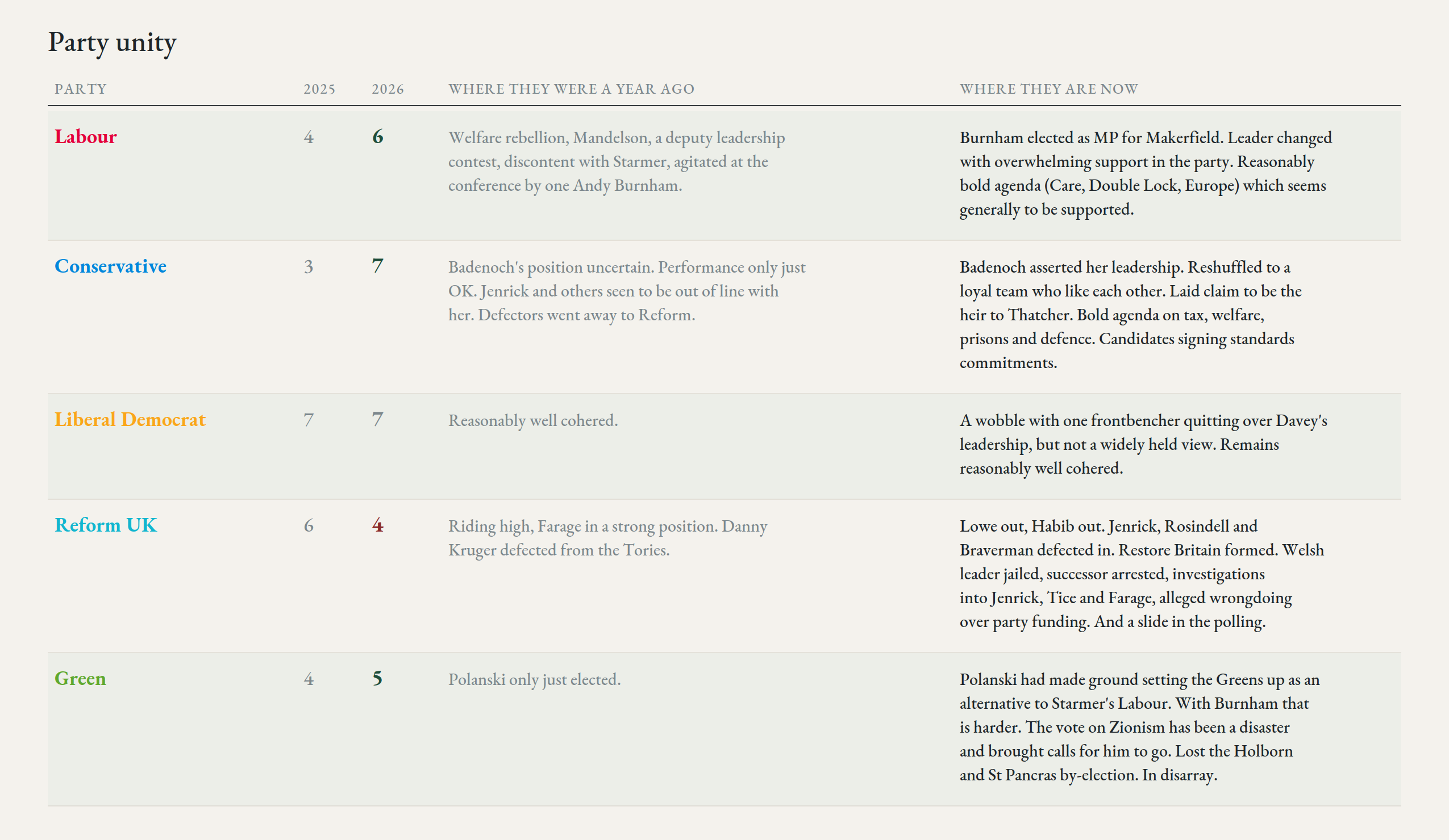
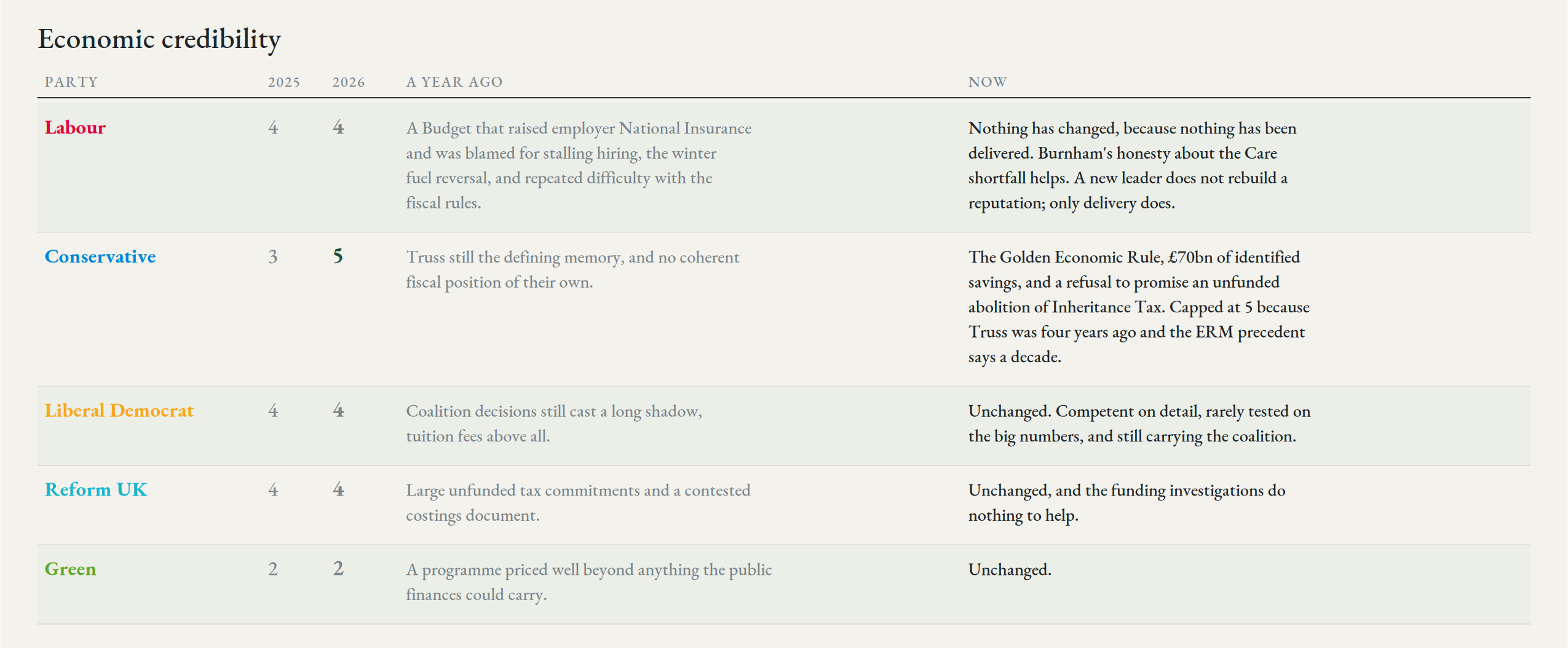
Here’s why the scores are what they are and why they’ve changed in the last year. Of course it’s my opinion and you may disagree. If so, tweak the scores accordingly. I don’t think we’ll be far apart.
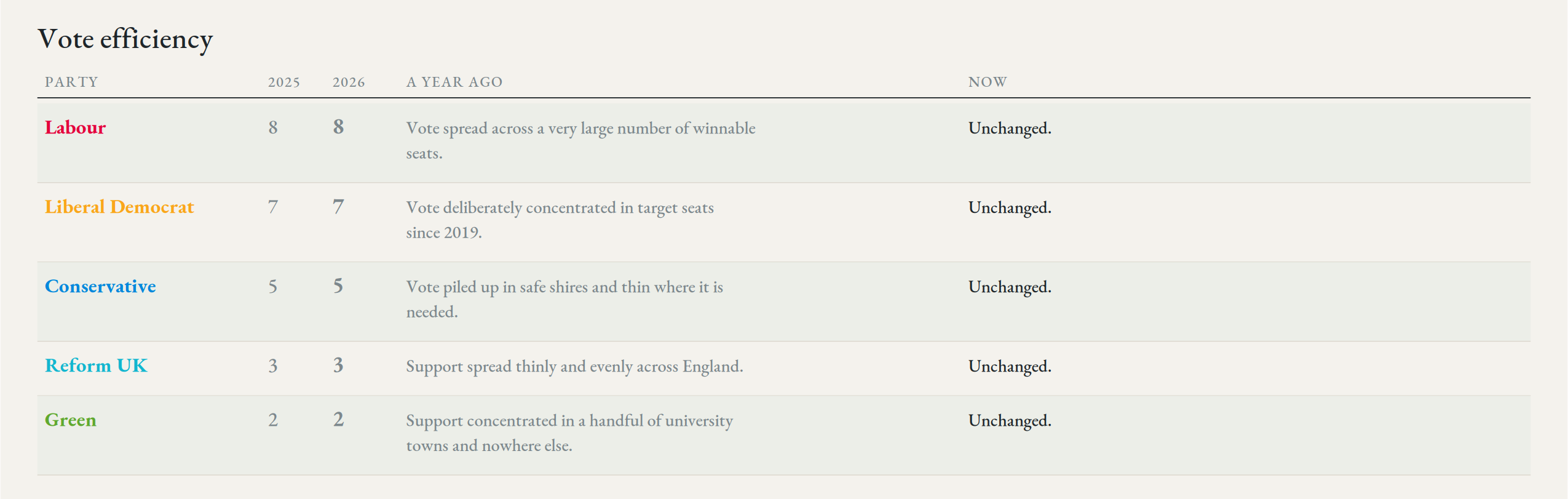
What vote efficiency means, and why nothing moves. It is how well a party’s votes convert into seats, which under first past the post depends on where they are rather than how many there are. An evenly spread vote wins nothing: in 1983 the SDP-Liberal Alliance took 25.4% of the vote and 23 seats, while Labour took 27.6% and 209. A concentrated vote wins seats cheaply: in 2024 Labour turned 33.7% into 63% of the seats.
It barely moves year to year because it is a function of geography and decades of local organisation. Labour scores 8 because its vote sits across hundreds of marginal seats. The Lib Dems score 7 because since 2019 they have deliberately stopped campaigning everywhere and concentrated on a few dozen. The Conservatives score 5 because their vote is piled high in safe shire seats, where extra votes win nothing, and thin in the marginals where they are needed. Reform scores 3 because 23% spread evenly across England produces very few wins. The Greens score 2 because they are strong in a handful of places and invisible everywhere else.
This is also the criterion that carries no weight in the scoring, because no model built on national factors can price it. It decided 1983, 2015 and 2024.
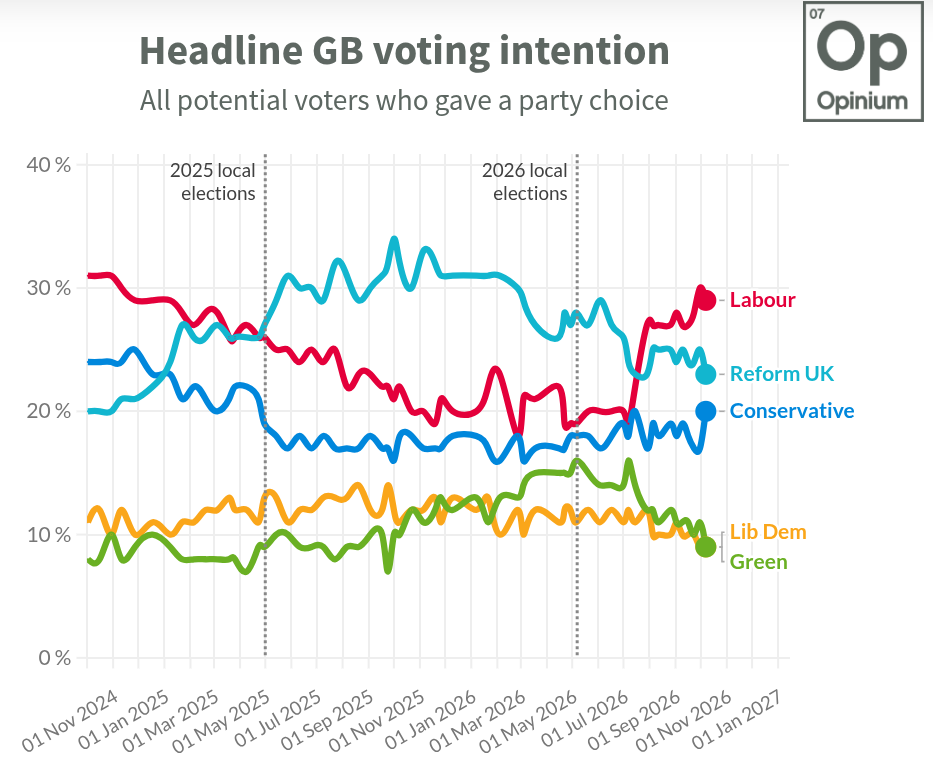
Voting intention doesn’t quite match my analysis
Source: https://www.opinium.com/resource-center/voting-intention-7th-october-2026/
What this shows in particular is that: Labour under Burnham has grabbed back the votes from the Greens; and the Tories are resurgent.
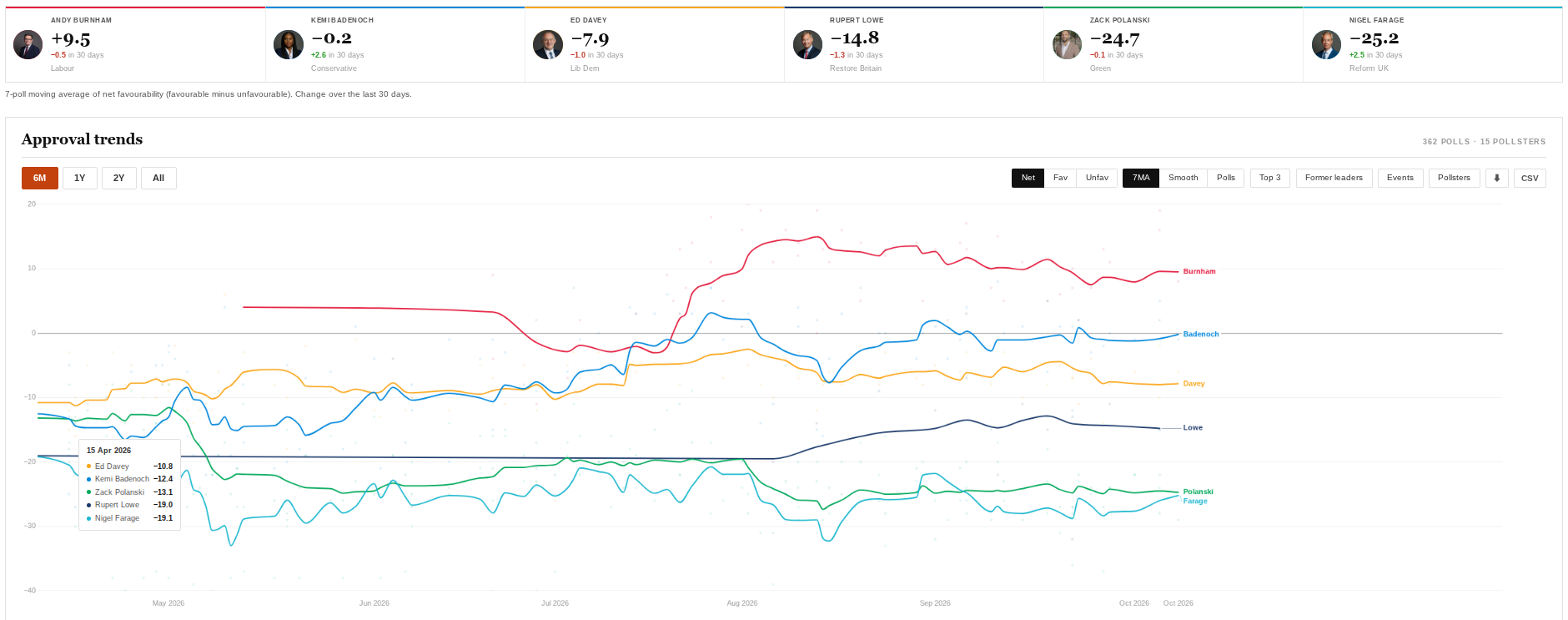
Look also at leader popularity scores: Andy Burnham on +9.5; Kemi Badenoch on −0.2; Ed Davey on −7.9; Rupert Lowe on −14.8; Zack Polanski on −24.7; Nigel Farage on −25.2. Andy Burnham has pulled his party up; Kemi Badenoch hasn’t yet achieved that, though at −0.2 she is the only opposition leader anywhere near positive; Zack Polanski pulled his party up but is now dragging it down; and Nigel Farage is pulling his party down, but where would it be without him?
Source: https://www.pollcheck.co.uk/favourability-ratings
What might each party do to strengthen its position in the coming year?
Labour. Improve economic credibility: actions that deliver meaningful impacts on the cost of living now, saying how Care will be funded, and focusing on cost cutting and debt reduction to bring down gilt rates and the country’s cost of borrowing. Burnham and Healey need to persuade the party that welfare reform is required, and that it can be done while protecting the vulnerable. Hard to say how Europe will play out, but my sense is they should try to turn the nation towards rejoining, and back off if there’s no clear majority for it by the election.
Conservatives. They need most of all to have an agenda that will appeal not just to their core - there aren't enough seats there for a majority - but to the marginals. This means changing position on the Triple Lock to enhance perceived economic credibility; embrace Care and fund it with a new Health and Wellness Levy; soften a bit on Europe - the country wants a change they'll back it, likely to push Reform into staying firm on Europe with its ever narrower appeal; work on from their gimmicks (Inheritance Tax, Britannia Shield) and stake stronger and clearer claims to tax reform and security/resilience - areas where Labour is weak; and pull the public along with the leader's popularity and turn it into party popularity.
Reform. Farage needs to get a grip: put the sleaze stuff behind him; stop playing victim - it isn't working; work out a position that gets Reform back ahead of the Tories by grabbing tax reform, Care, security/resilience before the Tories take them and commit to Defence spending; change position on the Triple Lock; and soften the position on Europe. I can't but help feel they're a busted flush - Farage remains a very divisive figure and that won't change, but nor will a change of leader help them either. What is the party without Farage?
Lib Dems. Settle the party down. Stay the course. They’re never going to win, and the best they can hope for is to maintain their geographic focus, get as many seats as they can, and prop up Labour if it ends up short of a majority. Propose a new Health and Wellness Levy to fund Care, and Rightsizing Relief, to show they are a party of ideas at least, even if others then adopt them.
Greens. Polanski needs to reassert his leadership. They’ll still be also-rans, but are more likely to continue to exert pressure on Labour to stay to the left.
Let’s see where we are in a year’s time. Much could still change, although Labour’s and the Conservatives’ positions have firmed up a lot already.
𝚃𝚑𝚎 𝙾𝚗𝚎 𝙼𝚊𝚗 𝚃𝚑𝚒𝚗𝚔 𝚃𝚊𝚗𝚔